

The Case for Sustainable Deliveries Starts at Your Own Front Door
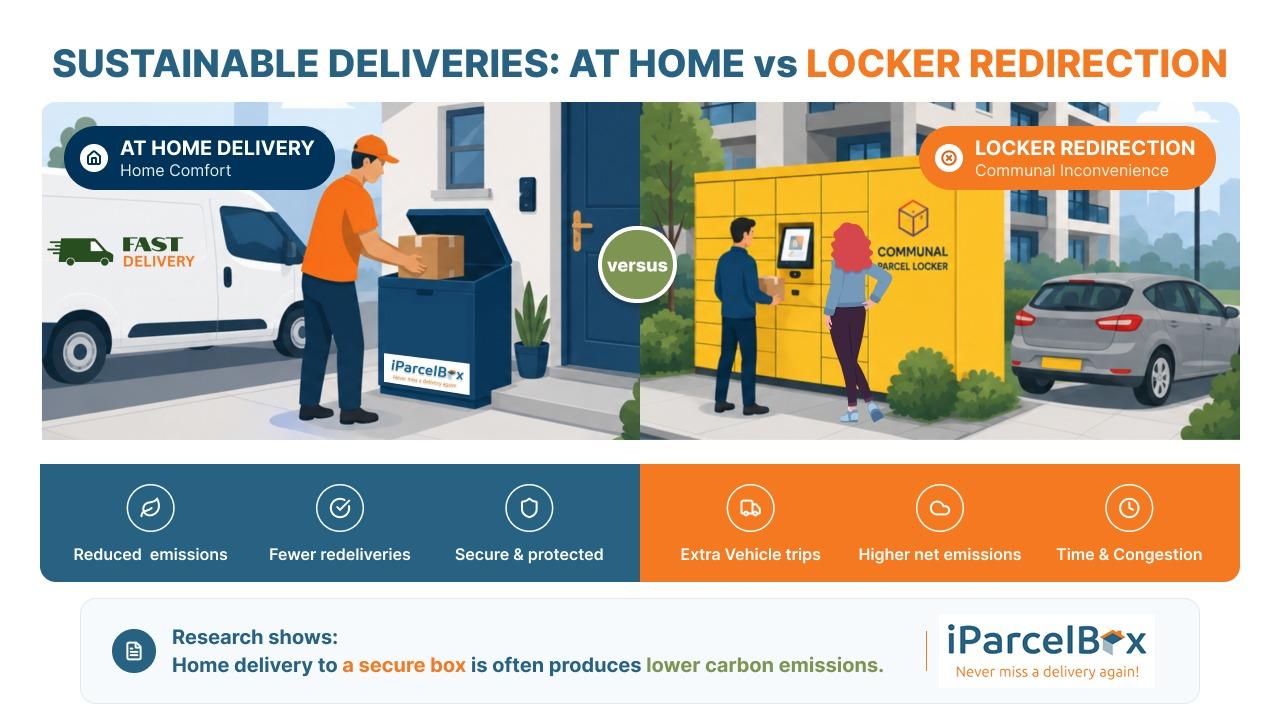
UK online retail is now worth over £120 billion a year, and every one of those purchases ends with a delivery. As the property and construction sectors look for practical, measurable ways to cut carbon, the assumption has often been that moving deliveries away from the home, to a communal locker, a collection point, depot, is automatically the greener choice; Academic research says otherwise.
-
The maths behind a 'greener' delivery isn't what you'd expect
The maths behind a 'greener' delivery isn't what you'd expect
iParcelBox (A smart parcel delivery box manufacturer) has worked with the University of Hull's Aura Innovation Centre to develop a carbon-mapping model for UK e-commerce deliveries. The project was funded by the European Regional Development Fund and led by Dr Sushma Kumari, Programme Director for Logistics and Supply Chain Management at Hull University Business School, supported by two master's students and a PhD student.
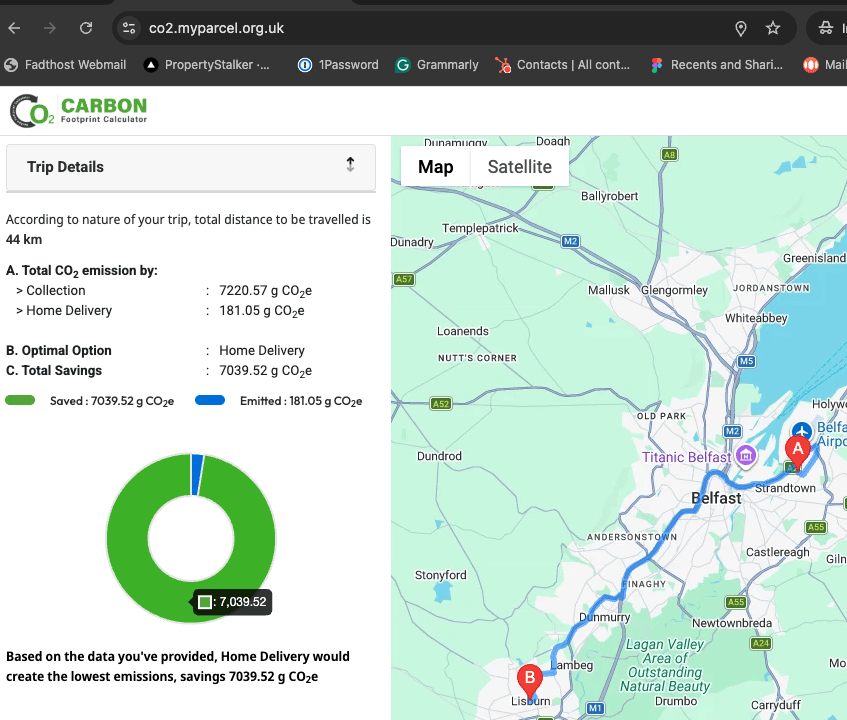
The model does something most delivery emissions claims do not: It counts the customer's own journey to collect a parcel, on foot, by public transport, or by car, alongside the courier's emissions, and checks whether that is combined with an existing trip. The result, a free calculator at https://co2.myparcel.org.uk, found that for a large proportion of the population, delivery straight to a secure home location is the genuinely greener option, particularly where collection from a locker or pick-up point would otherwise require a dedicated car journey.
Failed deliveries carry their own carbon cost
The case for getting a delivery right first time, at home, is reinforced by earlier academic work. Research from the University of Southampton found that a second delivery attempt can increase emissions per parcel by 9% to 75%, depending on the failure rate of the round, with 85% to 95% of that additional carbon coming not from the courier's second visit, but from the customer's own trip to collect a missed parcel from a depot or collection point.
Parcel theft compounds the problem: The 2025 Parcel Theft Report from Parcel Pending by Quadient found reported theft up 77% year-on-year, with UK losses now estimated at £666.5 million. Every stolen parcel that needs replacing effectively doubles its own carbon footprint > A second manufacturing run, a second delivery, and in many cases, a second failed attempt.
Why this is a responsibility, not just a policy problem
Courier fleets are electrifying, and route optimisation is improving, but those changes sit with logistics providers and take years to filter through a national fleet. The choice of where a parcel actually gets left, on the doorstep, in a locker down the road, or inside a secure box at home, sits with the property, not the courier. That makes it one of the few carbon levers in a housing development or rental portfolio that a developer, landlord or homeowner can act on directly, rather than waiting for someone else's supply chain to catch up.
For real estate developers, landlords and homeowners, the levers already available are straightforward:
• Specify secure, at-home parcel delivery on new developments, rather than relying on communal lockers alone
• Avoid the assumption that pushing deliveries out-of-home is automatically the sustainable choice
• Reduce failed first-time deliveries, which the Southampton research shows carries the single biggest carbon cost of all
• Report first-time delivery success as a measurable data point where portfolios already track ESG and Scope 3 performance, as covered in our previous look at the SFR doorstep problem
For individual homeowners, it's simpler still: a secure box at the front door removes the need for a car journey to a collection point altogether, and keeps paying that saving back every week the property is occupied, the same low-cost, high-impact logic covered in our piece on Smart Parcel Delivery Boxes for new-builds.
A practical fix: Secure, at-home smart parcel delivery
iParcelBox, aSHEDyt marketplacevendor, is a secure, weatherproof smart parcel box installed at the property. Couriers press a button to request a delivery, which requires no code, no app of their own, and no need to leave a parcel exposed on the doorstep or divert to a locker. The homeowner or renter gets a real-time notification and retrieves the parcel when it suits them, with no dedicated collection journey required. Because every successful first-time delivery avoids both a redelivery attempt and a customer collection trip, it addresses the two biggest carbon costs identified by the Hull and Southampton research in one move.
The infrastructure already exists
Sustainable deliveries do not need to wait for new courier technology or a fully electrified national fleet; The infrastructure already exists, and it starts at the front door. iParcelBox is available to property owner-operators and developers who want to build this into their next scheme. Find out more by emailing [email protected] or call +44 (0)208 6291052 to install a more sustainable delivery solution at the front door or to support the building concierge.
Make Your Business Online By The Best No—Code & No—Plugin Solution In The Market.
30 Day Money-Back Guarantee
Say goodbye to your low online sales rate!