

The UK's fastest-growing residential asset class, has a doorstep problem
UK Single Family Residential has moved from a marginal footnote in the Build-to-Rent pipeline to its dominant force. The capital following it is serious, though it has a doorstop problem that nobody is solving.
According to Knight Frank's Single Family Housing 2025 report, SFR's share of total BTR deal volumes grew from 2% in 2020 to 43% in 2024. A record 31 deals were completed last year, up 24% year-on-year. Over £1.8 billion was deployed in 2024 alone, with total investment since 2020 now exceeding £4.4 billion. Lambert Smith Hampton forecasts the wider BTR market will reach £6 billion in 2025, an all-time record, with SFR as one of the primary drivers.
The investor base has broadened considerably. CPP Investments committed £500 million alongside Kennedy Wilson. The National Pension Service of Korea placed £300 million into a Long Harbour fund targeting £1.6 billion. Blackstone and Lloyds Living are both active. Knight Frank's survey of the UK's largest living sector investors found that 71% plan to target SFR over the next five years, up from 41% currently invested. JLL estimates institutional SFR stock will exceed 50,000 homes by the end of 2025, growing at twice the rate of UK multifamily.
This is a structural shift, not a cycle.
The SFR experience gap
When institutional capital deploys into multifamily BTR, the resident experience playbook is well established. Schemes like Moda's Loudon's Yard in Birmingham or the established portfolios in Manchester and Leeds offer: concierge services, branded resident apps, smart access control, and amenity booking systems. Operators have benchmarked and refined these. Tenants now expect them.
SFR is different. The product is a house: suburban, dispersed, without a shared lobby or reception desk. The tenant, typically a family or professional household that has chosen space and a garden over a city-centre flat, arrives with the same expectations for convenience and digital connectivity. The infrastructure to meet those expectations is less developed.
Savills' 2025 UK SFH Spotlight noted that operators are beginning to adopt keyless entry as standard across SFR portfolios. The operational advantages are clear: contractors receive remote access, wasted site visits are eliminated, and there is no requirement to change locks between tenancies. This is multifamily technology migrating into the SFR context. It will not stop at keyless entry.
Parcel delivery: an unaddressed gap at the SFR doorstep
In multifamily BTR, parcel management is a recognised operational challenge. Industry data from the Safety Letterbox Company shows delivery volumes in residential buildings have grown over 40% in five years. UK online retail reached £120 billion in 2025. A single BTR building can receive over 4,000 parcels in a week. Staff time spent logging, sorting and distributing can run to 36 hours weekly. That is time operators do not budget for and cannot absorb indefinitely.
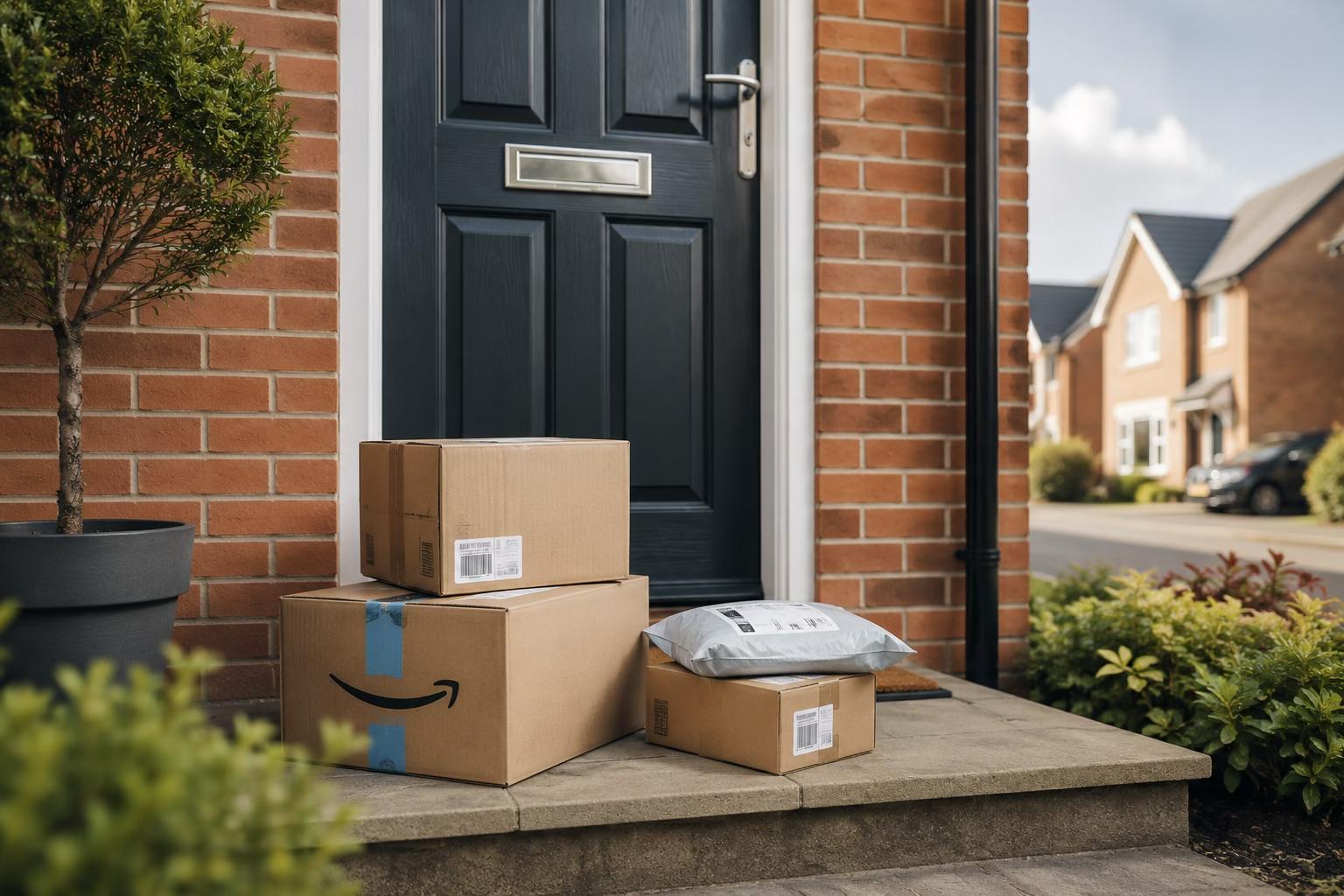
In SFR, the challenge presents differently. There is no shared parcel room. No concierge. No reception desk. When a courier arrives at a dispersed SFR home and the tenant is not present, the courier either leaves the parcel on the doorstep, chucks it over a fence, spends time finding a neighbour who is in, or returns it to the depot.
Porch piracy, a term initially coined in the US, is sadly on the rise in the UK. The 2025 Parcel Theft Report by Parcel Pending by Quadient found that reported parcel theft increased by 77% in the past year:
1 in 6 UK households (17%) were affected
The average value of a stolen parcel rose to £138, up from £102 in 2024
Total annual losses across the UK are now estimated at £666.5 million
Nearly 60% of thefts occur between 9am and 5pm, when working tenants are most likely to be absent
The opportunity for SFR operators is straightforward. Providing secure, unattended delivery as a service, built into the tenancy and available on day one, creates a practical, visible benefit that tenants use every week.
The case for Smart Parcel Boxes, such as iParcelBox in SFR
SHEDyt's marketplace vendor iParcelBox is an example of a secure, weatherproof smart parcel delivery box which allows couriers to make deliveries when the tenant is not at home. Couriers simply press the button to request a delivery, then lift the lid when it unlocks. The resident receives a real-time notification. The parcels are secured inside the locked box until they return.
The box is courier-agnostic: any carrier can make a delivery without a code, passkey or app of their own. It connects to the resident's smartphone and can integrate within a single tenant-facing app. SFR operators are increasingly moving towards unified resident platforms: one interface for rent payments, maintenance requests, smart home controls and community communications. Though other delivery box systems are available, iParcelBox is designed to sit within that environment, rather than alongside it.
For SFR investors and operators, the case rests on four points:
Tenant retention
Families in SFR homes are longer-term residents than typical apartment tenants. The cost of a void in a three-bedroom suburban home is substantially higher than in a studio flat. Providing secure parcel delivery as a service is a practical benefit that tenants interact with several times a week. That regular, positive interaction with the operator's platform supports satisfaction and renewal in a way that infrastructure improvements rarely do.
Portfolio differentiation
As the UK SFR sector professionalises and institutional capital competes for the same schemes, operators who deliver a superior resident experience will achieve better occupancy rates, lower churn and stronger asset valuations. A resident platform that includes secure parcel delivery, alongside smart access, energy management and maintenance, is a differentiator that tenants notice on day one and value throughout the tenancy.
Operational efficiency
Dispersed SFR portfolios cannot rely on on-site staff to manage last-mile logistics. Specffically the Smart Locker provider iParcelBox requires no staff involvement. The courier delivers. The resident retrieves. The operator receives no complaint.
ESG credentials
Each first-time delivery via iParcelBox eliminates a failed-attempt cycle and its associated redelivery emissions. The 2025 Parcel Theft Report notes that a stolen parcel requiring replacement effectively doubles its carbon footprint. Across a portfolio of 500 or 1,000 homes, first-time delivery success rates represent a measurable and reportable reduction in scope 3 emissions, a data point of growing relevance to the pension funds and institutional investors now active in UK SFR.
SFR is now a mainstream UK asset class. The pipelines are in place. Schemes are being built across 132 local authorities. The resident experience infrastructure is the next area of competition.
The doorstep is part of that infrastructure. Every delivery, every day, is part of the service that operators are providing and tenants are judging them on.
SHEDyt is currently promoting iParcelBox, which integrates within SFR resident platforms; Get in touch with them here https://www.iparcelbox.com/?partner=shedyt and solve this doorstep problem!
[B103]
Make Your Business Online By The Best No—Code & No—Plugin Solution In The Market.
30 Day Money-Back Guarantee
Say goodbye to your low online sales rate!